Recent from: Turn Adds Howe To Board, Tallwave Accelerating, OpenX And Dentsu

The ‘Yield Management Tools’ Category

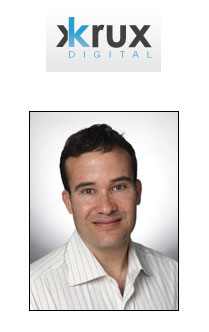
Krux Digital Ready To Establish New Rules For Data Usage Says Founder Chavez

Krux DigitalTom Chavez is Founder of Krux Digital.

AdExchanger.com: How is this platform addressing data leakage (see Chavez recent opinion piece) unlike other publisher-side platforms?

TC: We believe that publishers need to solve the data protection problem before they plunge into data management and monetization. Obviously data leakage and data collection have been getting a lot of press lately. Regardless of what unfolds in the press, Congress or the FTC, all the publishers we're talking to already have a clear interest in demonstrating responsible stewardship of consumer data. The first part of our platform, Data Sentry, detects who's grabbing data on a publisher's site – what we refer to as a 'collector,' who's ushering in those collectors – we call those guys 'ushers,' how much data collection is occurring, across which sections, audiences, and channels, with the ability to drill into individual pixels, individual collectors, individual ushers. Because of the variety of browser and HTML standards out there, identifying how collectors and ushers chain themselves together and reliably measuring data leakage at scale turns out to be really hard.

Beyond the privacy issue, which is a biggie, it's clear that publishers who leak data are leaking money. So Data Sentry offers a KPI on the revenue exposure from unauthorized data collection. By measuring the opportunity cost from data leakage in this way, our Data Sentry adopters can start to recapture lost revenue one nickel at a time.

Finally, there's latency. As all those rogue pixels accumulate on a publisher's site, it takes longer and longer for their pages to load. That's a bad thing for the user in any context, but now that Google and Bing are moving to factor page load times into their rankings, it also degrades the publisher's traffic from search referrals. So publishers have a basic operational need to clean up their pages and manage down the overpixelation that's going on. Data Sentry helps them do that by measuring the latency impact from individual pixels, ushers, and collectors.

How will the demand-side benefit from and interact with the Krux Digital platform?

Read the rest of this entry »

AdMeld CEO Barrett On New Funds And Next Steps

AdMeldAdMeld announced in a release that it has raised $15 million in an investment round "led by Norwest Venture Partners (NVP). Time Warner Investments and the company’s existing backers, Spark Capital and Foundry Group." Read the release.

AdMeld CEO Michael Barrett discussed the capital raise and insights on the industry.

When you went out seeking a third round of funding, what were you thinking in terms of new investors, generally speaking?

This all came together very quickly over the past few months. Before we had even considered taking on new money, we were fortunate to build strong relationships with the teams at Norwest and Time Warner Investments. Jeff Crowe at Norwest, who’s now joined our board, is extremely knowledgeable about the DSP/SSP/Exchange space, and Time Warner brings a great premium publisher perspective to the table.  The more we learned about the value these teams could bring to AdMeld, it became a natural next step to start talking about how we could work together.

How is the funding climate for ad tech this year compared to the climate for your infusion last year?

Though my sense is that VCs are generally more cautious today than they were in even 2006/2007, over the past year the ecosystem in which AdMeld operates has become very hot. In addition, the company itself has grown dramatically over the past 12 months, which pushed a lot of risk out of the equation, so this time the interest was very pitched and high.

What do you specifically plan to do with this new capital raise?

This raise is about accelerating our development cycles so we can bring our products to premium publishers more quickly. Our roadmap is filled with some very exciting offerings that we’d like to get to market as efficiently as possible. It’s also going to help us as we continue to expand internationally.

Has real-time bidding been a game changer for AdMeld?

RTB has been highly beneficial for our publishers—it’s connected them with millions of dollars in budgets they probably wouldn’t have had access to otherwise, and given them a much higher level of transparency and control over every transaction.  As a result, it’s had a big impact on AdMeld’s operations, development focus, and sales outreach strategy.  Today RTB makes up around 20% of our overall impression volume, and for some of our publishers it represents 60% of the revenue we generate for them. We’ve seen what it can do, and with each bid we’re learning more about what it means for the future.  RTB is something every premium publisher should have in their mix.

What questions are publishers asking you today that they weren't asking you last year?

As agency trading desks have grown in importance and visibility, we’ve been getting a lot more questions from publishers about the role these entities should play in their strategies for sales, coverage, pricing, etc. We don’t see this changing anytime soon. Other than that, I’d say questions about data and data protection is on the tip of everyone’s tongue.

By John Ebbert

Yieldex Seeing Traction In Premium Yield Optimization Says CEO Shields

YieldexTom Shields is CEO of publisher yield optimization company, Yieldex.

AdExchanger.com: What have been some big surprises to you regarding the industry as a whole in the past 12 months? - And for Yieldex in particular?

TS: The biggest surprise to me is twofold: 1) that so many DSPs sprang to prominence and got the attention that they did, followed by 2) the gnashing of teeth when Invite Media sold to Google for what people thought was too little money.   For years now, there have been so many networks and so many means of reaching remnant inventory – while inventory that generates real revenue for publishers and more value for marketers has been ignored.  As the emergence of a yield management function at major publishers begins to take hold, then we’ll see meaningful value being added to our ecosystem.

For Yieldex in particular, I would say that I’m surprised at how many ad operations leaders have taken on the additional responsibility of looking at premium yield in addition to their day jobs.  Our business has grown well despite the lack of a yield management function at most publishers.

What are you seeing in regards to traction for Yieldex products and services?  Who's using Yieldex?

Read the rest of this entry »

CEO Goel Discusses PubMatic Sell-Side Platform And Momentum

PubMaticPublisher yield management company PubMatic announced yesterday that it has seen significant growth in the past year. In a press release, the company said, "PubMatic also announced that sales revenue is up over 700% in the last year. At the same time, its reach has grown from 150 million unique users per month globally to over 360 million." Read it.

PubMatic CEO Rajeev Goel discussed the company's momentum as well as strategy surrounding its sell-side platform for publishers.

AdExchanger.com: Of the inventory managed by PubMatic, how much is guaranteed and how much is non-guaranteed inventory? How will you penetrate guaranteed?

RG: Let me start with guaranteed/direct sold inventory.  We actually don’t manage our publisher’s guaranteed inventory per se, instead we provide publishers with the audience data they need in order to sell audience-based inventory directly - and we give publishers the means to manage it themselves.

Advertisers are asking to buy audience-based advertising directly from the publishers themselves, but most publishers don’t have the ability to meet that demand.  Using audience data from multiple data providers that are partnered with PubMatic, the publisher can package their audience and sell it directly to agencies and advertisers.  It’s not unlike how the ad nets and DSPs are working with similar data providers, on the flip side, to get access to publisher audiences and sell those audiences indirectly to advertisers.

By doing this, PubMatic is helping publishers on two major fronts:

Read the rest of this entry »

Metamarkets CEO Soloff Announces $2.5 Million Funding From IA Ventures And Allen & Company Execs Among Others

MetamarketsDavid Soloff, CEO of Metamarkets, shares details of his company's first round of financing as well as positioning for the company as it prepares for its next steps.

AdExchanger.com: Can you share a bit of background on you? And, where did the genesis of the idea come from for Metamarkets?

DS: My cofounder Mike Driscoll and I have a diverse background. I come from the world of quantitative finance, by way of digital media and analytics. Mike comes from genomics and bioinformatics, by way of massive scale data analytics on behalf of media, banking and telecom. Given the market opportunity we're addressing, our skills and experiences complement each other really well.

The idea for Metamarkets came from two principal places: my time working in the financial markets where the amazing information flow and diverse data sets and products available to the actors in those markets create liquidity, efficiency and velocity for all principals. And from my time at Rapt where I learned how little data and information is available to the supply-side principal actors in the media markets, despite the best attempts of the optimizers to deliver value to publishers. The situation for the supply side has only deteriorated since 2008 when Microsoft bought Rapt.

What problem is Metamarkets solving?

Read the rest of this entry »

Rubicon Project Buys SiteScout; COO Roah Discusses Acquisition

The Rubicon Project Buys SiteScoutPublisher yield optimizer, Rubicon Project, announced that it has acquired SiteScout, a company whose technology looks to "prevent malicious ads and other dangerous Web content from reaching customers." Read more.

Craig Roah, COO and Founder of The Rubicon Project, talked about the acquisition and how it will be integrated into the company.

AdExchanger.com: Why buy SiteScout in particular?

CR: As we detailed in our manifesto, Principles of a REVVolution, or the ad server is dead, we are committed to offering publishers technology that counteracts the problems created by legacy ad serving technology. We count malware in the group because there is almost nothing in legacy ad serving systems that protects publishers, their advertisers or consumers from malware. In addition, we committed to providing publishers safe, efficient and profitable access to all sources of demand – and technology that protects them from malvertising exploits is a key piece of this platform.

The industry is seeing a massive influx and growing complexity of threats related to malware and compromised Web content. We began to look for the right security partner to help address this growing issue in 2009, evaluating several solutions in this space to complement and strengthen our industry-leading Brand Protection technology platform. In side-by-side tests, in a live production environment with real ad tags on premium websites, SiteScout was hands-down the most effective technology. Their ability to find and prevent malware far exceeded all the other providers.  SiteScout is a true Internet security company. This acquisition will enable us to offer premium publishers the most effective technology platform to address the very real, very dangerous and fast-growing problem of malvertising.

Does SiteScout address malvertising OR malware?

Read the rest of this entry »

PubMatic CEO Goel Discusses Series C Funding, Company Plans

Publisher yield optimization company, PubMatic, announced a $7.5 million Series C investment round led by existing investor Helion Venture Partners. Read the release.

CEO Rajeev Goel discussed the funding and plans for the company.

AdExchanger.com: Can you talk a bit more about how your platform will manage both direct and non-guaranteed inventory? Why the move here?

RG: The PubMatic Premier platform isn’t really a move in a new direction, but more of a natural expansion of offerings that we’ve been working on for a long time - and helping publishers manage their inventory is just a part of it. We have been helping publishers better manage and monetize their non-guaranteed revenue since 2006, but now we’re also giving publishers the opportunity to manage and better monetize their guaranteed inventory.

We’ve also built out the most comprehensive suite of publisher focused brand control products on the market. This includes RTB brand control too, which we’ve had for 15 months.

In fact, we’re hosting a private event next month at the Helen Mills Theater in NYC to showcase those brand control products. So PubMatic’s Premier platform is not just about managing guaranteed and non-guaranteed inventory, it’s truly about giving publishers more revenue and more control.

How does the revenue model work for direct inventory management? (a license, % of CPM, etc.)  Can publishers work with PubMatic on direct channel management only?

In terms of revenue it is similar to our core offering, we charge publishers based on the value of media that we manage.  In terms of how publishers use guaranteed channel management, it really depends on the individual publisher needs.

With "700% growth in revenue," where does PubMatic shake out with profitability today? Is that a 2010 goal or in the future?

No doubt we’re experiencing tremendous momentum on many levels, but we’re not taking our eye off the ball. We’re about building a strong company that helps premium publishers manage and monetize their ad inventory. We’re 100% focused on being the best at that, which means continue building out the best team in the business and continuing to be the leader in innovation for this space.

By John Ebbert

Rubicon Project Announces Real-Time Bidding And Publisher Controls

The Rubicon ProjectThe Rubicon Project announced that it will be launching real-time bidding functionality to a limited group of demand-side partners in addition to providing controls to Rubicon Project publishers. Read the release.

Rubicon Project's VP of Marketing Kara Weber discussed the news and its implications.

AdExchanger.com: When will the beta begin with your demand-side partners and what do you expect the initial impression levels will be as in - will it include all available Rubicon Project inventory? Or do publishers need to opt-in first, for example?

KW: Our real-time bidding technology is live in alpha testing with a limited number of publisher partners. We are launching RTB technology now that Permission Control technology is in place to ensure that publishers can accept real-time bids safely, efficiently and with the rules of engagement between them and demand partners made clear to all parties. Among the Permission Control settings for RTB are, yes, opt-in (by partner), and assigning which inventory will be made available to bidders in the Protected RTB program, among many others. We will be adding more publishers to the program in coming weeks.

Why is real-time bidding good for publishers?

Read the rest of this entry »

GM Burke Says FatTail Offering Supply-Side Platform Solution

Doug Burke is General Manager of FatTail, an online advertising technology company.

FatTailAdExhchanger.com: How did FatTail begin?

DB: FatTail formed in 2001 to apply the tools and technologies of financial trading systems to the data rich world of online advertising. The founding team, which continues to lead the market’s innovations, had extensive experience in advanced trading systems of equity, bonds and derivatives and had built and sold companies to SunGard and Cantor Fitzgerald. The term FatTail, coined by Benoit Mandelbrot, IBM Fellow Emeritus and Sterling Professor of Mathematical Sciences, Emeritus at Yale University, describes how to understand and manage the real world risk that typical mathematical models fail to capture. We are helping our publisher clients manage their real world risks in revolutionary ways.

What problem is FatTail trying to solve?

There is a brand new universe of electronic buying for guaranteed inventory that can only be effectively serviced electronically. We are helping our clients tap into this demand at lower costs. Our solutions put publishers in full control of who they trade with, how they price and whether they want to accept or reject the orders.

What advertising trends are you seeing from your clients through Page Gage?

We have been watching the emergence of automated buying systems and Demand Side Platforms (”DSPs”), and we designed and started building PageGage to protect and automate our Publisher clients’ interests when transacting with these platforms.

We define demand side platforms as any buying system that wants to automate with our clients and they include 1) agency systems, 2) local buying systems, and 3) direct response buying systems. The agencies have augmented their buying expertise with DSPs and many have found their clients are NOT satisfied with the inventory available on exchanges and want to buy premium, guaranteed inventory. Local advertising has its own group of new buying systems.

Read the rest of this entry »

CEO Goel Discusses PubMatic Premier Platform, Defines Its Version Of The Sell-Side Platform (SSP)

PubMaticToday, PubMatic announced that it is offering a next rev in its publisher-side yield optimization platform which notably includes "guaranteed inventory yield management" and possibly puts it into competition with Yieldex, which has been working the direct sales optimization side for publishers for a while now. See the release.

AdExchanger.com spoke to PubMatic's CEO Rajeev Goel about the implications of this iteration of the PubMatic platform.

AdExchanger.com: Is this the PubMatic answer for the Supply-Side or Sell-Side Platform (SSP)?

PubMatic pioneered the ad network optimization space with its founding in 2006. However, it's clear that publishers need much more than just ad network optimization. As the market has evolved, media buying has evolved, and new opportunities such as audience data and real-time bidding (RTB) have emerged, publishers need a much more advanced platform for managing their ad revenue and brands. It's fair to refer to this as a sell-side platform (SSP).

The SSP of the future will manage both guaranteed inventory (what a publisher's sales force sells directly) and non-guaranteed inventory (monetized via ad networks and exchanges). But it will do far more than just sell this inventory - it will integrate audience data from third parties, it will actively manage the publisher's brand and protect from malware and poor quality ads, it will provide an integrated yield curve across both the direct and indirect sales channel, it will provide a controlled RTB environment for the publisher, and more. We think that the new PubMatic Premier is the first offering in the market to provide publishers with all of this and we're looking forward to expanding it as well.

Can you expand on how PubMatic's platform manages "Guaranteed
Inventory Yield Management" and provides insights? Any examples?

Read the rest of this entry »

AdMeld Offering Real-Time Bidding To Publishers With UK Audience

AdMeldIn a release today, AdMeld announced "the introduction of Real Time Bidding (RTB) capabilities in the United Kingdom" through its partners AdJug, AppNexus, Infectious Digital, Invite Media and MediaMath. Read more.

AdExchanger.com corresponded with AdMeld CEO Michael Barrett about the news ...

AdExchanger.com: Are you aggregating UK publishers and selling their inventory? Or, are you selling UK audience from non-UK publishers - primarily U.S. publishers I would assume? Please explain.

MB: Both. We’re giving any premium publisher with an audience in the UK the ability to monetize that inventory via RTB.

AdExchanger.com: What special challenge(s) does the UK present AdMeld? (i.e. There are many ad networks on a percentage basis of inventory in comparison to the U.S.; skepticism about yield optimizers; they're used to networks, etc.)

MB: We’ve been extremely encouraged by the interest in our service in the UK. In an environment where, as you said, there are so many sources of demand, premium publishers are looking for ways to connect efficiently and safely with the best of them, and AdMeld saves them a great deal of time and effort doing that. One of the keys to what we do is giving publishers more options and more control of their ad inventory—and RTB is a natural extension of that.

By John Ebbert

      © Copyright 2010 Adexchanger.com. All rights reserved.
      Terms Of Use      Privacy Policy      Contact Us