

 Certain CBS TV properties like Entertainment Tonight (ET) do double duty as digital publishers. ETonline for instance had 93 million video views in November – more than a 400% increase from 2014 – and 26 million monthly unique visitors.
It’s now fourth for market share in the entertainment news category, according to comScore.
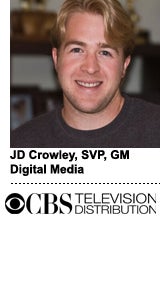
JD Crowley, SVP and GM of digital media for CBS Television Distribution, credits CBS’s cross-platform push, backed by a unified sales team across the portfolio.
Overseeing Entertainment Tonight’s digital business, Crowley also runs social and digital marketing for all CBS Television Distribution shows like “The Insider,” as well as partnerships with large publishers and portals like Yahoo.
Crowley spoke with AdExchanger about CBS Television Distribution’s programmatic and social distribution priorities.
AdExchanger: Where does CBS Television Distribution fit within CBS Interactive and the CBS network?
JD CROWLEY: We work deeply and closely with the teams over at CBS Interactive and the network on a daily basis. At times we approach the market as one depending on what we’re trying to accomplish.
Since a lot of our video business right now is coming from programmatic private marketplaces, it’s data-driven and we’re really looking at our strategy in a video-agnostic way.

We’ve been in the native or custom content business for over a decade now in linear and syndicated television shows. We do a lot of brand partnerships for our shows across “ET,” “The Insider,” “Rachael Ray,” “Inside Edition,” “The Doctors” and “Dr. Phil,” so our digital business … really started from our studio business.
How are you organizing your sales teams?
This year, we spent a lot of time and effort reworking the makeup of our sales team and how they worked across linear and traditional media. So we have the typical 30, 15 and 10 [second] ads in our shows, which is a big business for us. [We also have] cross-platform native integrations and our digital sales business, which is our digital revenue operations or programmatic team. We’ve formed one team, so they’re all marching together and having unified conversations in the marketplace.
Can you share an example of a cross-platform buy?
There are buyers and partners who want to buy linear media on ET, custom content on ETOnline and then they might want to set up a private marketplace to buy video across all of our properties including “Inside Edition” and “Rachael Ray,” so by having one unified sales team that has cross-platform ownership, including programmatic, native, direct and cross-platform video fluidity, it has allowed us to solve a lot of objectives for our partners and brand clients.
What distribution platforms are performing best for you?
When we started to build our digital business, we really didn’t have scale on any one platform. The strategy, previously, had been just to take the TV shows and distribute them online in short form. As you well know, audiences want to consume content tailored for each platform. When we put ET on Facebook, it wasn’t [about extending] the television show into Facebook. [It was about] what an entertainment news brand on Facebook look like for our target audience, which is women 18-34 online?
How do you prioritize platform vs. on-site or on-air content distribution?
We have large video consumption on ETonline. And a significant portion of our views come from consumers watching news, content and entertainment and lifestyle content on ETOnline.com.
We also have significant scale on each of the social portals, and we’ve developed significant scale in a very short amount of time on YouTube. We think it’s because we look at each partner, be it AOL or Facebook, … (as a unique channel) where viewers are consuming content in a way that feels native to that platform.
We leverage our television show talent on ETonline.com and on social, but we have another group of digital talent that writes and produces and also reports out their own content on ETOnline.com and on social. We’re figuring out how we can cross-pollinate insights from one platform into one another.
Is CBS Television Distribution’s large library of syndicated TV content attractive to publishers faced with premium video scarcity?
Video has been at the core of our DNA for decades. The infrastructure we have supports our traditional linear business includes programs that produce high show counts (for instance, ET produces six shows per week). It was important to us to maintain that timeliness or urgency online, so we have digital teams embedded in our traditional production teams.
Our goal is to get any breaking news video live on our site and across all of our partnerships both on social and distributed video, within 60-90 minutes. And we consistently hit that, so that makes us an important partner for portals and other publishers (like The Huffington Post). This includes publishers who are competitive with us in the comScore rankings and those who syndicate our video.
You can try to gain digital audiences all you want by releasing shortform or autoplay videos into the newsfeed, but we try to stay out of the fray. We focus on quality storytelling. … It’s my job to focus on monetization, not my editors. I don’t want them thinking about that. I just want them connecting with audiences, adding value to our audience and telling the best stories in the business … there’s an insatiable appetite for video out there.
What’s one of your priorities moving into 2016?
We try to work deeply with strategy teams on the brand and agency side to connect the dots with what they’re doing on social. If we’re working with a brand on the Oscars’ Red Carpet, we may activate a segment around “in-show fashion” on Friday night to drive tune-in to the linear show. We may also do an activation live from the Red Carpet on Instagram or native Facebook video and an activation on ETonline that’s custom video and text and photo content.
We’re also investing in our own data capabilities, working with a number of different SSPs and figuring out how we can ensure our DMP integrates with those. Great, unified measurement is one thing, but our audience wants value and our consumers have objectives, so we need to get really segmented and targeted.
This interview has been edited for clarity and length.








