 AOL introduced its own native ad unit for the mobile Web and apps on Thursday. The ads include an image and text that is inserted in between content on the publisher’s site or app.
“Before, if advertisers wanted to work with seven different publishers, they’d have to customize their creative and specs with each one, but advertisers can just give us an image and text and we’re off and running,” said Chad Gallagher, director of mobile at AOL Platforms.
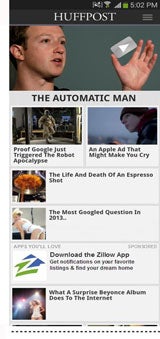
AOL has tested its native ad units across several of its mobile properties and apps such as TechCrunch, Huffington Post, DailyFinance, Engadget, AOL Mail and Autoblog. Approximately 50 advertisers, such as Zillow, are already using the native ad units.
The company also tested the ad units with several third-party publishers, including online file-sharing and storage service 4shared, which is already running the native ads on its site, Gallagher said.
The native ad units are only available through direct sales, but AOL plans to make the ad units available through its real-time bidding platform “in the near future.” On the publisher’s side, the native ad units will be added to AOL’s Marketplace and it will live in the AdLearn Open Platform on the demand side.

The ads can be targeted against the customer’s first-party data as well as AOL’s data, including information about the mobile carrier, device operating system, content verticals and user demographics, e.g., women ages 18-49.
AOL is one of many companies that have unveiled native ad formats. AOL’s native ad unit follows Twitter making its native ad format available to all publishers on Tuesday. And Sharethrough this month launched an SDK enabling publishers to run native ads on apps, in addition to the mobile Web and desktop.
But it remains to be seen whether brand advertisers will embrace native ads beyond app installs. A quick review of in-stream ads on Yahoo’s mobile site, for example, showed mainly ads from app developers like Kabam, Supercell and Goodgame Studios.
AOL’s native ads are mostly app install ads as well. While the majority of clients are using its native ad formats to drive app downloads, AOL is also pursuing other campaigns, Gallagher explained. He demurred when asked to explain what those campaigns would look like, except to note that the company will have more to share soon.
“We started with the demand for an app download unit, but the concept of native is much bigger than that,” he said. “We’re already hearing from brands that say they want to engage in more native formats.”