 Are lock screens the next billboards? A growing number of vendors say yes.
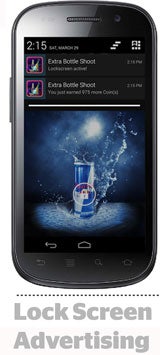
One such company is Canadian startup Adenda, which launched an SDK on Tuesday that allows developers to add rich media notifications, ads and animations to an Android phone’s lock screen.
“We are providing (app developers) new opportunities for monetization and user engagement,” said Adenda CEO Francis Doumet. “Mobile developers don’t have to wait for the user to return to their app for engagement; they can connect with their audience right on their Android’s lock screen and draw them back to their app sooner with incentives.”
Adenda’s SDK lets developers create their own layout or use one of Adenda’s built-in designs. (Most of the lock screen solutions are Android-based, since iOS lock screens have more complex requirements.)
If users opt to receive notifications on their lock screen, they can swipe left to interact with the content, such as opening an app, seeing an ad or watching a video, or they can swipe right to unlock the device.
The company is seeing the most interest from game developers who are looking for ways to further engage users, according to Doumet. Adenda is working with a handful of developers, Doumet added, but he declined to name the clients. “If a user wants to keep up with the latest developments of a game, like troop movements, or watch replays of games even when they’re not using the app, this is a way to quickly stay up to date,” he said.

Adenda does not collect any user data without the app developer’s approval, but advertisers could target ads or messages to users through the SDK, according to Doumet. The company is also developing a demand-side solution to let advertisers bid on inventory based on location, time of day and other criteria.
Adenda competes with other startups that deliver news and branded content on the lock screen, such as Locket, Celltick and HomeBase. Facebook and Twitter are also eyeing the lock screen. Facebook’s Home displays notifications on an Android lock screen and Twitter acquired the lock screen startup Cover in April. Cover learns when and where people use different apps and displays them on the lock screen for easier access.
Monetizing the lock screen through ads continues to be a challenge, though. Locket, for example, paid users to receive ads on their lock screen, but eventually shuttered that service since it was unable to “generate enough advertising revenue fast enough to cover our user payout.”
Brands should tread carefully before filling a user’s lock screen with notifications and ads, pointed out Matt Restivo, head of digital product at the National Hockey League, in a recent presentation at the Mobile Marketing Association’s New York Forum.
“The lock screen is the new news feed,” Restiv0 said. “But we have a responsibility not to overwhelm consumers with push notifications.”