“Data-Driven Thinking” is written by members of the media community and contains fresh ideas on the digital revolution in media.
Today’s column is written by Eric Franchi, co-founder at Undertone.
It seems that every single year for the past 10, someone has been playing the funeral march for the ad tech industry.
Venture capitalists have stopped investing, they say. Mar tech has eaten ad tech, they say. We already have our winners, they say, so why bother trying to compete with the Googles and Facebooks of the world?
It’s a topic I heard bubbling throughout Advertising Week. I think there is an alternative viewpoint that is worth discussing. The ad tech apocalypse isn’t happening – not today, not tomorrow, not next year.

The numbers suggest the opposite. Q1 internet ad revenue was up 21% over last year, for example, its biggest year-over-year jump ever and a first-quarter high of almost $16 billion. With more people online and more screens than ever, there’s nowhere to go but up since ad tech provides the infrastructure to support it all.
So where are these horsemen of the apocalypse riding in from?
Mar Tech Is Eating Ad Tech
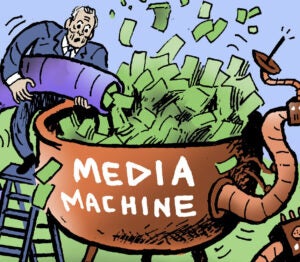
There are a few different sources. First, there’s this idea that marketing technology is leeching funds from ad tech, essentially devouring the market. It’s easy to see how the storyline goes: Marketing technology, which is based on platforms rather than media, offers a predictable monthly revenue model. Investors love that. Ad tech is based on percentage of media, performance or on a campaign spend basis. That means that even with a seven- or eight-figure valuation, an ad tech investment comes with a certain degree of uncertainty.
What if the media buys are small or campaigns don’t perform? Subscription-based mar tech platforms, even with a lower valuation, offer a safer investment, and that’s why many VCs have shifted their focus. But who are ad tech players looking to please: investors or advertisers?
Growth
As channels, users and overall time spent on digital devices grow, so too does the demand for innovation in online advertising. From 2014 to 2015, video starts on mobile devices increased 33%. Those numbers will continue growing as more digital natives enter the market.
As new platforms and devices are introduced, they will likely require the support of advertising. The internet of things launches a vast array of new opportunities for advertisers, for example. Augmented reality just became accessible this year, and with the likes of “Pokemon Go,” we may be seeing an entirely new and exciting use case for mobile.
What that means is more – not fewer – companies will enter the market, with or without funding, because the market will demand it. These new channels and devices will require fresh thinking around formats, creatives and logistics.
The Programmatic Revolution Isn’t Over Yet
Finally, programmatic advertising is only just hitting its stride. After winning over the mainstream three years ago, the technology is only midway through its revolution. Some of the world’s largest advertisers are only just getting on board. Two-thirds of digital display advertising is purchased programmatically, which still leaves room for growth.
Programmatic has largely focused on standard display advertising and efficiency-based spend. The next wave of programmatic spend will come from brands. We’ve built a lot of the infrastructure, but we still have much room for innovation around attribution, formats and using data to fuel creative.
Haven’t The Winners Been Decided?
How can the ad tech winners already have been chosen when the game isn’t over? Google and Facebook have scored lots of points, but there is still a lot that can happen. There is the emergence of new, scaled players like Verizon. The internet of things is only just getting started. And we haven’t yet experienced the true potential of mobile devices.
I’m confounded by the Chicken Little types who believe ad tech’s days are numbered. Are they hoping their competition will be overtaken with fear and leave the market? That’s the opposite reaction they should have. They should embrace the competition. Competition is awesome. Competition forces innovation. It’s where great work comes from.
For those who still want funding, there’s still funding to be found. In 2000, there were maybe 50 VCs and angel investors who mattered but now there are many times that. Some, following the recent successful IPO of The Trade Desk and other recent large exits, are starting to pick their heads up. There’s a tremendous opportunity for innovation growth in every corner of the ecosystem. Today, some of those areas are seeing a little oversaturation, which will result in consolidation. There will be casualties, but overall it’s very positive for the industry as a whole. It’s certainly not an apocalypse.
So please, stop calling it that. And get back to work.
Follow Undertone (@AccessUndertone) and AdExchanger (@adexchanger) on Twitter.