Here’s today’s CTV news round-up… Want it by email? Sign up here.
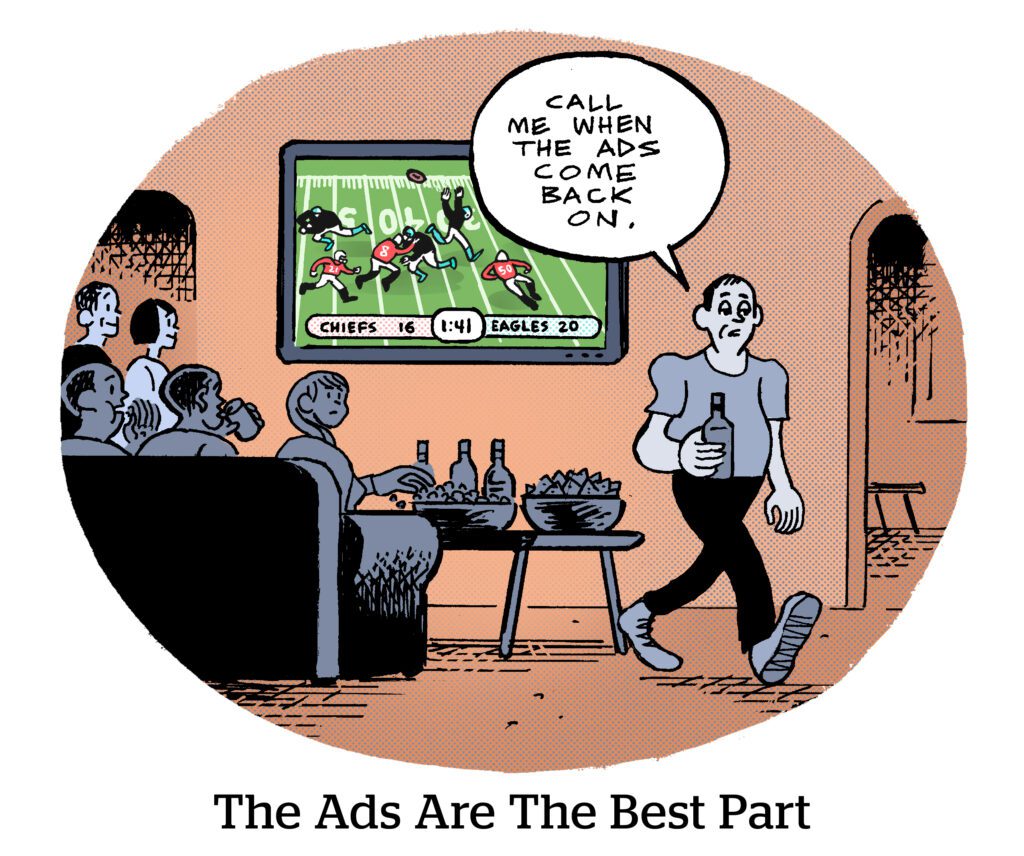
The Super Bowl has always been a promotional pageantry for brands – and this past weekend’s game was no different.
But this year’s ads were unique in that they clearly reflected recent cultural shifts in the US.
When the game wasn’t buffering (because even live sports are streaming now), I saw multiple ads for streaming services in roughly the amount of time it took to eat a single box of mozzarella sticks.
There was a 60-second spot from Paramount+, two co-branded Netflix promos and two spots for Fox-owned Tubi, including one 15-second ad that managed to spark online outcry.

But Super Bowl LVII also made history as the first big game played in a state with legal sports betting, and sportsbooks were there to advertise their services, of course.
Stream on
Back to streaming, though, the competition between services is only getting fiercer now that most have an ad-supported offering. Platforms are under massive pressure to build subscriber bases big enough to woo advertisers into spend commitments during the upfront season.
Netflix isn’t a regular Super Bowl advertiser (unless it’s got a new season of “Stranger Things” to promote). But having launched ads three months ago, the company went full bore during the Super Bowl this year. It ran two separate co-sponsored spots with General Motors and Michelob Ultra to plug a variety of shows, including “Full Swing,” “Bridgerton” and “Squid Game,” featuring skit-like storylines.
Paramount also hyped its streaming platform, but that ad scored lower than average on brand recall compared with other Super Bowl ads, according to new research from Unruly.
Why? Could be because Paramount’s ad featured a hodgepodge of characters jammed together in the same mock scene, including Beavis, Butthead, Sylvester Stallone, Chris Pine as Captain Kirk and Dora the Explorer (yes, seriously). They all have shows on Paramount+, but the ad felt pretty random.
But Tubi’s prank ad, by comparison, was quite memorable. The ad begins by panning away from the Super Bowl announcers to a scroll-through of Tubi’s library, making just about everyone who saw it live think they sat on their remotes.
Tubi, we totally fell for it.
Vibe check
So, there was no avoiding streaming during this year’s Super Bowl. (Although it was easy to avoid crypto ads … since there weren’t any.)
But there was another big theme at the big game: sports betting. Both FanDuel and DraftKings advertised during Super Bowl LVII, and total wagers placed were expected to set a record at around $16 billion.
DraftKings and FanDuel both opted for humor in their spots – that was another theme this year. Advertisers went for laughs.
Last year, brands focused on upbeat and inspiring stories as a contrast from pandemic doom-and-gloom. With another year of space from COVID woes, this year’s batch of ads had a more comedic tone.
Dodge Ram Trucks, for example, made headlines for an electric vehicle spot designed like a pharma ad for erectile dysfunction (“premature electrification”), and Uber brought back 10-year-old internet memes (like the song “What Does the Fox Say?”) in a nostalgia-packed ad for its delivery service, Uber One.
What I’m wondering is: Which of these ad trends will stick around beyond their Super Bowl stage time? (And do you want to bet on it?)
Let me know what you think. Hit me up at alyssa@adexchanger.com.