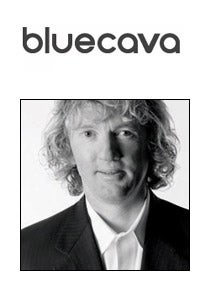
 David Norris is the CEO of BlueCava, an advertising technology company.
Please share a little history on the company. BlueCava was spun-off. Why?
DN: In early 2010, BlueCava was spun out of its parent company, Uniloc, to be a focused operating company to take Uniloc’s core technology to market. As part of the spin-out, BlueCava took an entire operating business, including technology, patents, people, customers, and partners. BlueCava’s technology has been around for many years and is installed on millions of computers around the world. Since the spin-out, BlueCava has aggressively invested in developing additional technology and building its brand.
What problem is BlueCava looking to solve?
BlueCava solves the problem of identifying who is visiting your web site. Using our technology, we can identify the desktop, laptop, or mobile device that a user is using to visit sites, make purchases, or surf the web. By being able to identify the device, businesses can improve the way that they interact with the user – providing more relevant information, advertisements, or user experiences. Businesses can also determine if devices have a history of committing fraud, so they can protect themselves.

Are you concerned that users will be concerned that there user IDs will give away private information? How do you overcome this concern?
We take consumer privacy very seriously. We have a strict policy of not using any personal information about the user. We only identify devices and avoid all personal information. We also believe that consumers should have the opportunity to understand, and control over how targeted advertising is done. BlueCava provides consumers with the ability to configure the types of relevant information/advertising that they want to receive. We also give consumers the ability to completely opt-out of targeted advertising. We believe that putting the consumer in control is the best way to gain consumers confidence.
Who is your target market on the advertiser side? Will you work with partners such as ad networks and data exchanges to facilitate ad sales?
Our customers on the advertising side include Demand Side Platforms (DSPs), ad networks, ad servers, media buying companies, publishers, and marketers. We work with each of these groups to provide device identification and device targeting services.
What are the applications beyond advertising for user IDs?
In addition to providing advertising solutions, we also enable a number of other solutions, including: fraud solutions, age verification, social networking solutions, and digital rights management solutions.
How will the “publisher” side play out? Do you target all mobile handset manufacturers, for example?
We do target mobile handset manufacturers, as well as other OEM’s, such as computer manufacturers, networking hardware vendors, software vendors, and embedded solutions. Device Identification has many applications and we are embedding our technology in many areas to provide valuable solutions. One example is a partner, Econolite, who embeds our technology in control boxes at each intersection, that control the traffic signals.
In general, what’s your view on consumer privacy online? For example, do you see a generational divide where younger generations are less concerned about their online data?
Consumer privacy is a big topic. I believe that for most consumers, it is not about privacy, but rather about disclosure – they want to know what is being used and how. Certainly some information needs to be kept private, but there is definitely a generation divide. The younger generations are very open about sharing personal information at a level that most more mature generations would find disturbing. But, even the younger generations care about privacy when it comes to certain information.
Over the next 5 to 10 years, consumers in general will become much more accustomed to targeted marketing efforts – to the point where they will expect them. They will demand relevant information, rather than the generic types of advertisements that we were accustomed throughout the 1990’s and 2000’s. Consumers will just expect things to be tailored for their wants and needs.
Can you quantify how large the company is today in terms of revenue, clients and/or employees?
We are privately held and do not disclose any internal information about the company. I can say that our headquarters is located in Orange County and we also have people in New York, Philly, Dallas, San Francisco, Chicago, and Boston.
Please discuss the $5 million recently invested in the company.
This is an exciting time for BlueCava – as we have just raised a round of funding that was more than 500% oversubscribed and I am very excited to have 2 very seasoned entrepreneurs as investors – Mark Cuban and Tim Headington. The interest in our company became very evident when we opened this round of funding and had so many people that wanted to invest – so many that we finally had to close the round, making many investors wait until the next round to be able to get in.
Besides Mark Cuban, who else is investing? What are your plans for the funds?
We brought in a small group of investors, that included Mark Cuban and Tim Headington. This funding will be used to expand our sales and marketing efforts, along with expanding our engineering efforts.
A year from now, what milestones would like BlueCava to have accomplished?
Over the next year, we have a number of ambitious goals. #1 – we will using our technology to identify over a billion devices. #2 – we will expand into Europe and Asia. #3 – we will increase our brand awareness significantly.
Follow David Norris (@David_L_Norris), BlueCava (@bluecava) and AdExchanger.com (@adexchanger) on Twitter.