Advertisers that push paid media with organic content on Facebook are driving measurably higher results than singular social efforts, one report has found. But the success of a campaign can vary greatly by post type.
According to new ShopIgniter data released in August, “The 2013 Social Rich Media Benchmark Report” reveals more retailers and brands are shifting from “right-rail” ads to a native news feed experience as advertisers begin to think about mobile and desktop campaigns less unilaterally.
Evaluating a sum of 2,000 Facebook news feed posts, more than 2 billion impressions and post-click performance rates over the course of Q1 and Q2, ShopIgniter found that unpaid “status posts” generated, on average, five times more organic impressions than any other type of post, although the “viral” reach from likes, comments and shares was not substantial. Additionally, posts that included photos and links generated click-through rates of .07% and .06%, respectively.

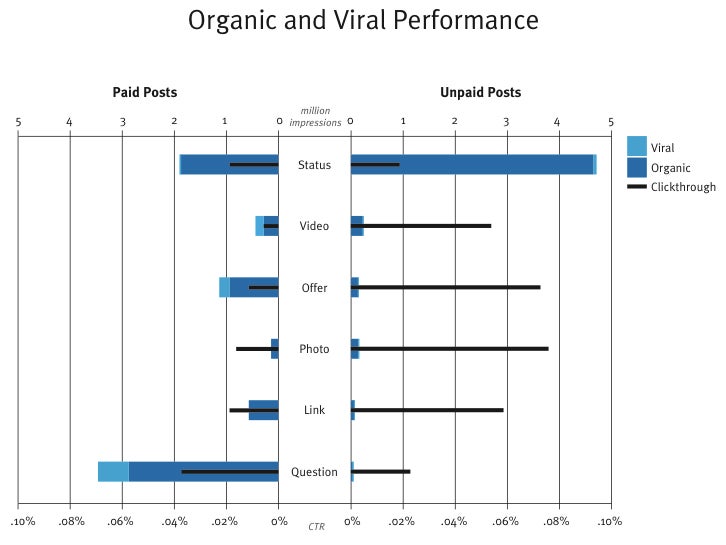
When paid media was introduced, “offer” posts, on average, resulted in the most organic and viral impressions. Although “status” posts generated 2.5 times fewer organic impressions when paid media was part of the mix, “photo” posts saw a sizable uplift in organic and viral impressions. Posts with video and offers saw 36% and 23% lifts, respectively, in viral impressions when paid media was part of the mix. 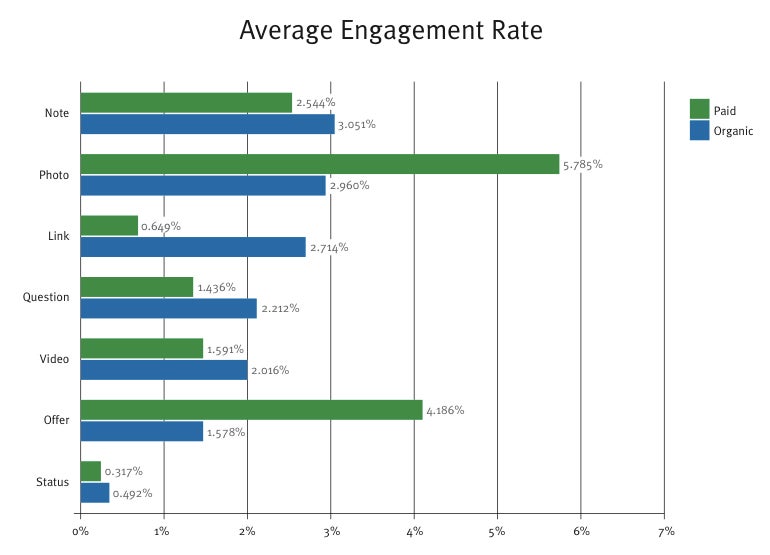
In addition to studying the effect post “type” has on organic vs. paid media, ShopIgniter looked at the performance of rich media on Facebook. It found such posts generated a 4.4% post-click conversion rate on Facebook.
There were various nuances to upticks in engagement. For instance, stories told using Facebook’s Open Graph tool with large images and links performed more strongly on mobile as opposed to desktop’s strongest contender, photo posts in-body that included links.
ShopIgniter also broke down behaviors associated with “Stories” and “Consumption.” Stories were defined as a series of actions that contributed to a post on a brand or engager’s Timeline, while Consumption was more of a one-time action, such as a click on a link or viewing a video.
When paid media was a part of the equation, consumption rates increased substantially for photos, remained the same for video and status updates and dropped for links. The recurring theme, then, is brands can’t take a one-size-fits-all approach to paid and earned media on Facebook, as each content type yields significantly different value for social advertisers.