
 There’s no doubt that every new smartphone app is up against some tough competition—whether it’s competing against thousands of other apps or vying for attention once it’s been downloaded.
When it comes to marketing mobile phone apps, certain strategies, like in-app advertising, generally encourage more app downloads, according to new data from mobile media company Zumobi.
The company analyzed mobile applications across its network of apps, from partners including NBC News, Popular Science, The Week, and more to determine what marketing strategies worked best in the app universe. Marla Schimke, VP of marketing for Zumobi, said that many companies and brands are getting into the mobile app space, but that they need to focus more on planning and strategy.

“Make sure you have a specific plan for your app,” she said. “Not just a plan for marketing, but a plan for monetization as well.”
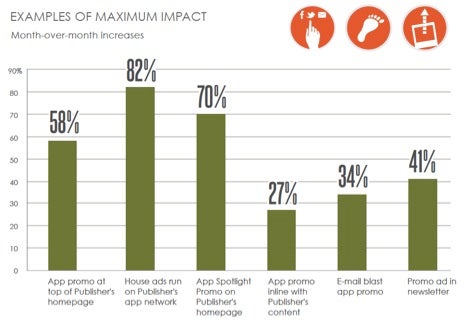
Apps that were advertised in other apps received an 82% month-to-month increase in app downloads. Those that were spotlighted on a company’s homepage saw a 70% increase in app downloads compared to the previous month, which didn’t have the marketing push.
These strategies work, as the company explained in its Zumobi’s App Promotion and Monetization Best Practices Playbook, because customers are often interested in apps that are similar or complementary to content they are already using. If they see an ad for a game app while playing a different mobile phone game, they may be likely to download it, or if they are on a company’s website because they are already interested in the brand, they are more inclined to be interested in the app as well.
Customers, however, aren’t as interested in being sent specific marketing messages only about the app, as email blasts just promoting an app saw only a 34% increase in downloads. Mentioning a new app in a general email newsletter saw a 41% increase in app downloads. Additionally, mentioning an app within a website’s content only saw a bump of 27% in app downloads.
 Many of Zumobi’s partners are well-known brands, but those that are lesser known have seen success simply by marketing their apps, Schimke added. One Zumobi partner, Relish, targeted outreach to mommy bloggers with a recipe app, Relish Daily Dish, and gained momentum.
“Look at all the communications vehicles and make sure your app is included,” Schimke said. “Get creative from a PR standpoint as well: do a press release or use social media to point people to the app.”
The Best Practices Playbook, which was released today, includes more tips and best practices for marketers hoping to maximize the reach of their mobile apps.







