

 Almighty, an independent digital agency in Boston, revealed on Wednesday the launch of a division called Almighty(X), designed to help clients evaluate their technology stacks from budget and optimization standpoints.
The goal is to provide more transparency in the agency-client relationship.
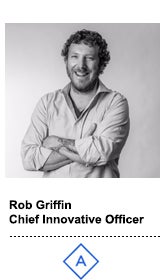
Almighty(X) will be headed up by Rob Griffin, a former senior executive at French media giant Havas who now serves as Almighty’s chief innovation officer. Trading desks run by agency holding companies are known to be opaque. The new role will give Griffin firsthand insight into the struggles they have in adapting transparent approaches.
For Griffin, transparency means letting advertisers own their own data and technology, and being involved in the campaign executions and aware of the performance they’re paying for.
“A lot of advertisers have been with agencies way longer than they’d like and they feel trapped because the agency owns the [tech] contract,” he said. Transferring data to another agency is often a difficult process that involves re-tracking, workflow disruption and productivity erosion, he said.
However, the other option – bringing technology entirely in-house – also isn’t right for most brands, Griffin said.
Griffin sat down with AdExchanger to discuss how large agencies are failing to provide transparency, and how Almighty(X)’s model will solve the issue for its clients.

AdExchanger: How does Almighty(X) solve the transparency issue for advertisers?
ROB GRIFFIN: We offer a hybrid model between the consultancy and the traditional agency while allowing advertisers to pay their own bills and own their data and technology. This model offers pure greater transparency. As an agency, I can’t gain attribution or add margins, so I have to truly add value where it’s important.
Second, it removes the agency from the back and the middle while still allowing it offer strategic support. Agency trading desks provide managed services on top of a managed service already offered by DSPs. As a result, they mark it up to pay themselves along the way. With my model you’re not only applying true transparency, but you’re reducing redundant cost layers in the ecosystem and knowing where that money went along the way.
Finally, by allowing the advertiser to take ownership of their own data, you’re able to go in and help them with more than just with their paid media. You can better help a client ensure that their data is shared across platforms that are currently siloed. You can guide them to use that data across different places and dynamically optimize the user experience at every touch point.
To what extent does a smaller, independent agency like Almighty approach transparency differently than that of a large holding company?
The large agency is stuck in a rut where the only way to make money is on margins, rebates or arbitrage. They want to buy media at scale and volume. They get pulled down into the weeds.
At Almighty, we streamline the ecosystem on the back end first. We do pilot testing to ensure that we have the right data and we’re not just using it to target an ad or buy programmatic. We’re using it to drive programmatic creative. We’re looking at how we can work with a publisher to merge data segments in a very hyperfocused way. It might not be the big budget buy, which is what I think the large holding company wants.
Is there a big difference in the agency-client relationships at Almighty vs. those at larger media agencies?
Trying to pivot a giant company is like trying to turn the Titanic. It’s a slow-moving process. You don’t have the ability to be as nimble and flexible in the day-to-day.
At Almighty, we’re a much smaller group, so we’re able to sit together and work with a more consulting-type model. We’ll audit what’s keeping [the client] up at night, what their needs are, what technologies they have in the back end, what agencies they work with and figure out the right way to get them all to work together.
Large agencies argue that when they’re transparent around costs, their clients put the squeeze on them. Is that a problem with a smaller agency as well? If so, how do you avoid that problem?
The problem isn’t that [rebates and kickbacks] are occurring. It’s that no one knows if they are or aren’t occurring, or at what rate. If an ad tech company offers an agency rebates based on their level of spend, they should take the money. What I want to do is have a transparent conversation with the advertiser. I’ll fully disclose the revenue I’m generating from this up to X number because that’s the money I need to be able to work on your business. Anything above that I’ll give it back to you to put into creative production, toward your DMP, into media, CRM, or whatever you want to do with it.
What is the biggest problem agencies face when trying to maintain transparent relationships?
One problem is breaking the whole RFP model, which is like Pavlov’s dogs. Agencies aren’t really taking in what the client’s problem is. They’re giving a much more generic presentation of “here’s the media I can buy for you.”
As a smaller agency, we’ll go to an advertiser and say: “You mentioned you have these problems. Let’s talk about them.” I’m not going in with a 200-slide presentation for an hour and a half. I’m asking the right questions to help them get more value out of the marketing and ad tech they’ve already invested in.
How does Almighty(X) ensure transparency? How do Almighty(X)’s transparency policies differ from other agencies?
Almighty(X) helps the advertiser figure out what technology they should be using. That could be a DSP, a personalization platform or a DMP. Should they be using Datorama instead of Krux or Moat? How can they deal with viewability or fraud?
Part of the key is my agency background. I know all of the going rates and what [advertisers] should pay. They sign their own contract and pay their bills directly to that vendor. At the end of the day, if they don’t like what I’m doing they can simply turn off my login and hire someone else.
How does your role at Almighty(X) integrate with your overall role at Almighty?
I’m helping the agency with new, cool companies like Swift or Snatch to do emoji or messenger app integrations. We’re working with a startup to help them put beacons all over a brands’ flagship stores, cache the data and use it do programmatic display retargeting and lookalike modeling.
I’m running and building out Almighty(X) as a new dedicated division. It’s a way for Almighty to approach media, ad and marketing tech outside of the creative piece of the equation.
What’s the employee headcount at Almighty and within the Almighty(X) division?
Almighty has around 35 employees. Almighty(X) is just me to start. There’s a small media team at Almighty. We’re sitting down to figure out how to roll that into what I’m doing.







