
Here’s today’s AdExchanger.com news round-up… Want it by email? Sign up here.
All Is Fair In Love And Panels
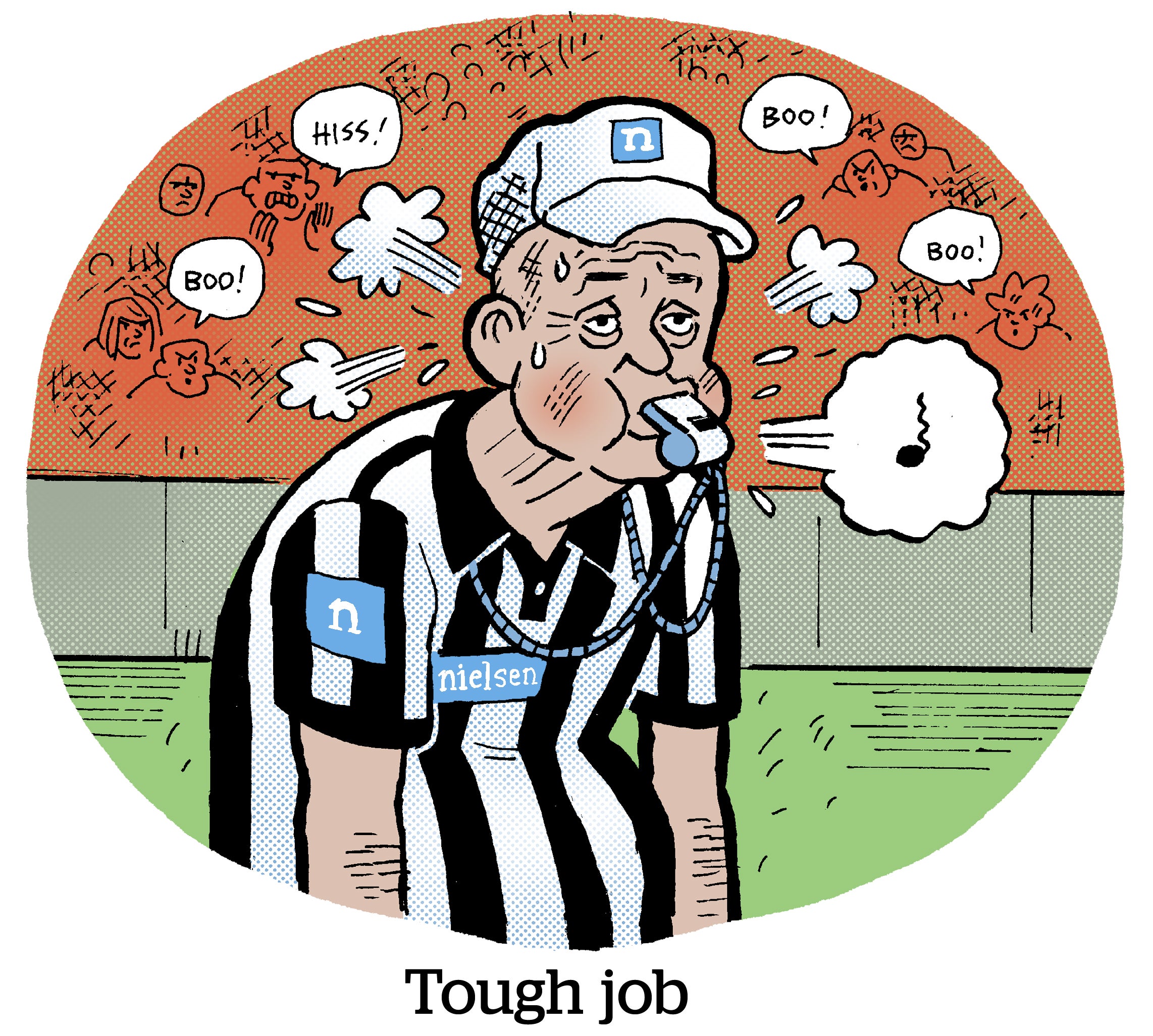
Nielsen has changed its mind: It won’t force Amazon streaming data into its TV ratings, Ad Age reports.
After over a week of drama, which involved exchanging letters with the Video Advertising Bureau, Nielsen is going back on its plans to put Amazon viewing data into its panel-based currency in time for this year’s Thursday Night Football (TNF) season.
Advertisers can still buy Amazon TNF inventory based on Amazon numbers if they choose, but they don’t have to.

Turns out, when Nielsen met with the Media Rating Council on August 30 to accredit its plan for integrating Amazon data, the meeting didn’t even end with a vote because “it appeared it would have been voted down,” one participant says.
Buyers oppose the plan because it would inflate Amazon ratings. TV networks are making moves to incorporate first-party viewing data into TV currency, but they’re opposed to Amazon getting an upper hand by doing it first.
Keeping Track
The Video Privacy Protection Act (VPPA) of 1988 is making a comeback.
The law prohibits video service providers (including streamers) from disclosing information about video consumption that’s linked to an individual without consent. But now, the VPPA is reaching beyond TV services, Insider reports. Brands simply posting videos on their websites are also getting hit with lawsuits related to the Blockbuster-era law.
In the past year alone, roughly 70 VPPA class action lawsuits were filed against defendants that include national brands: Mattel, General Mills, Geico, Folgers and Chick-fil-A. Heck, even Insider is in the middle of dealing with a suit.
The defendants stand accused of using tracking tech like Meta’s pixel or Google Analytics when they do video marketing on their websites. Running a tracker means they are potentially sharing personal info about users who watched a video ad with third parties.
But it’s not a sure bet that brands will bear the brunt of this law.
Last week, a judge dismissed the suit against General Mills because the food manufacturer doesn’t count as a video service provider. Time will tell how many lawsuits actually succeed in pushing brands within reach of the VPPA’s wrath.
AI-Generated Language Barriers
Generative AI’s mother tongue is English, Axios reports.
Many gen AI tools favor English because large language models (LLMs) predominantly train on texts and data in English.
For instance, OpenAI’s GPT models perform well with English and other languages that use the Roman alphabet but stumble with languages with different alphabets or structures than English. ChatGPT has trouble translating English into other languages and understanding complex requests in non-English languages. It has invented gibberish words and churned out nonsensical, grammatically incorrect responses to user questions.
Why is it a problem that English is gen AI’s lingua franca? Languages that are underrepresented online, even if they have millions of speakers, may be shunted to the sidelines by gen AI tools, locking their speakers out of information and advancements available only in English. Many of the more than 7,000 languages in the world, from Tamil to Thai to Haitian Creole, could fade away as gen AI tech infuses all aspects of human life.
Some developers are building multilingual LLMs or LLMs focused on specific low-resource languages. But the biggest LLM makers must broaden their cultural understanding to address AI’s dominant language bias effectively.
But Wait, There’s More!
New York bans geofencing near health care facilities. [Adweek]
Google turns to a steady old hand to fight antitrust charges. [The New York Times]. And, speaking of, Google filed a motion to dismiss a federal antitrust lawsuit from Gannett alleging that Google’s dominance in digital advertising harms news publishers. [Axios]
Alibaba is postponing its Freshippo grocery chain IPO following a lower-than-expected $4 billion valuation. [Bloomberg]
Spotify is brewing up a pilot program that will give subscribers access to up to 20 hours of audiobooks per month for free. [Wall Street Journal]
Meta to remove Facebook News in parts of Europe. [Marketing Brew]
You’re Hired!
Datonics names Rob Finora as chief revenue officer. [release]









