
Here’s today’s AdExchanger.com news round-up… Want it by email? Sign up here.
Detective Work
A pox on the ad tech tax.
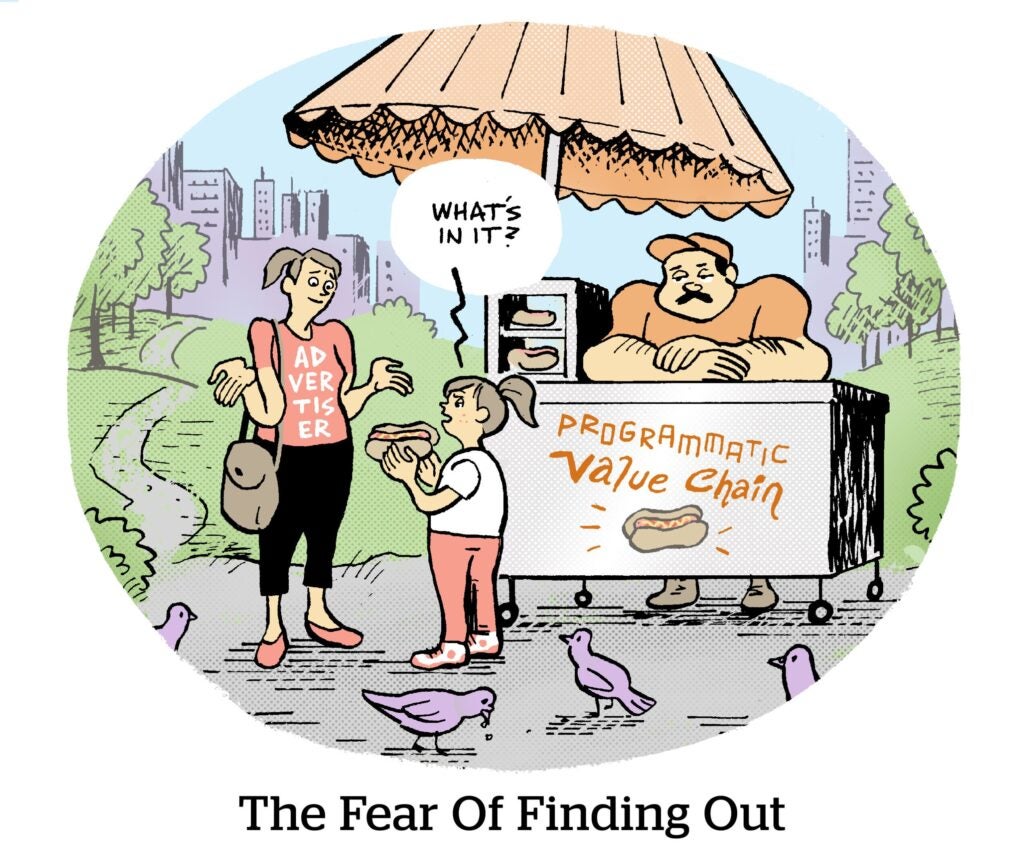
Google is promoting a new tool in its tech suite to help publishers and buyers track the hidden fees getting sucked up by middlemen in the bid stream.
Google initially launched its tool, Confirming Gross Revenue, last summer before making it publicly available through Ad Manager and DV360 this week.
How well it’s working, however, is another story.

Mediavine tested the product on behalf of buyers and didn’t find any hidden fees. But publishers are less than impressed. Many are “doubtful this will do much to alleviate concerns” about fees, Jason Kint, CEO of publisher trade org Digital Content Next, tells Adweek.
So, is the ad tech tax problem overstated or is the tool insufficient?
Perhaps both. PwC research from earlier in the year suggests that unattributable programmatic ad spend declined from 15% to 3% in 2022. Yet early testers of Google’s new tool only got information related to endpoints, not the hops along the way, Kint says.
Well, it’s not as if Google is well known for fairness in ad auctions.
Weighing The Advantages
Meta’s Advantage+ shopping campaigns are effective.
But signal loss dealt a serious blow to Meta, and it’s not clear whether Advantage+ is enough to help the company regain its crown as the king of paid media.
Advertisers may not move beyond the testing phase, Duane Brown, founder of marketing agency Take Some Risk, tells Digiday.
Although Meta can no longer use its pixel to tie impressions to conversions, advertisers can still pump in their first-party data. The catch is that Advantage+ doesn’t share detailed reporting, making it a black box.
And so, despite getting good results with Advantage+, advertisers are starting to spend more on other social media platforms, especially TikTok and Pinterest.
But the reason advertisers are diversifying spend away from Meta isn’t out of defiance against black boxes.
Rather, Apple’s ATT has revealed the general risk of relying too heavily on any one advertising channel.
You can’t just put all your eggs in one basket.
Cajun Consent
Louisiana is the latest state to pass a bill aimed at protecting kids from social media’s harmful effects, The New York Times reports.
The bill would prohibit online services from allowing people under 18 to sign up for accounts without parental consent. It would also allow parents to cancel any terms of service agreements their under-18 children have made for existing accounts.
The bill extends Louisiana’s existing contract law to include online terms of service agreements because they are technically contracts, and people under 18 can’t legally sign a contract.
The proposed law would impact a wide range of online services, including social media, video-sharing apps and online games. TechNet, an industry group representing tech companies including Meta, Google, Amazon, Apple, Uber and Snap, opposes the bill, claiming its age-verification provisions would also impact adult users.
The bill was passed just weeks after US Surgeon General Vivek Murthy released an advisory warning that social media negatively impacts the mental health of kids.
The bill now awaits the signature of Louisiana Gov. John Bel Edwards. If he signs, the bill will go into effect on Aug. 1, 2024.
But Wait, There’s More!
Adobe will pay damages and offer legal help if clients face copyright infringement claims from using its generative AI subscription service. [Bloomberg]
After backlash from creators, Twitch announced that it’s retracting the new guidelines on branded content it rolled out earlier this week. [tweet]
IOS 17 will automatically remove link decoration added to URLs for tracking purposes. [9to5Mac]
Digital ad spend in Europe increased 9.8% to $93 billion in 2022. [IAB UK]
You’re Hired!
Inderbir Singh Pall was appointed as CTO of the InMobi Advertising Platform. [release]







