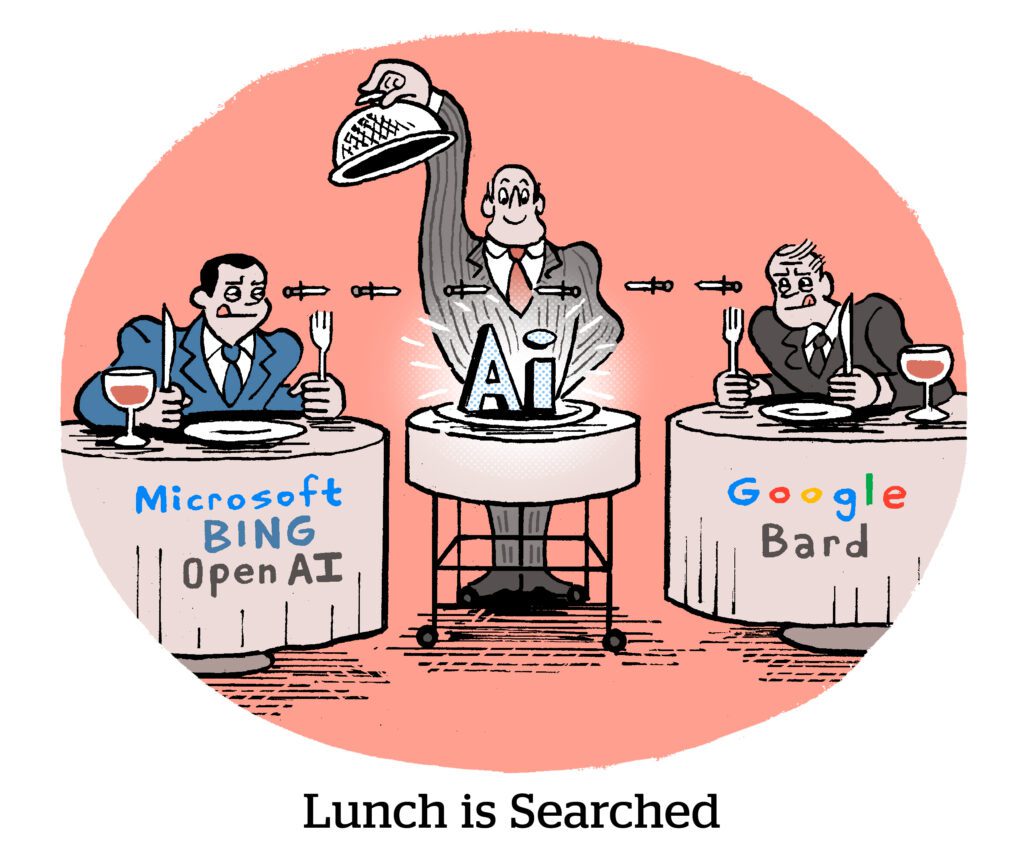
Programmatic ads have entered the chat … bots.
On Tuesday, PubMatic announced a partnership with Kontext, a platform that uses LLMs to generate relevant ads within AI chatbots.
The integration is Kontext’s first with an SSP, marking its introduction of AI chatbot inventory into the programmatic landscape.

Something old, something new
From a technical standpoint, the integration isn’t particularly novel. The campaigns operate within the OpenRTB protocol, for instance, just as other programmatic buys do, Nishant Khatri, PubMatic’s EVP of product management, told AdExchanger. He added that he doesn’t see the channel as “very different from the general programmatic benefits.”
The real novelty is the speed at which new AI chatbots are emerging and the interest ad buyers have in the products, according to Khatri. And while many of the major LLMs and AI chatbots, such as ChatGPT, don’t currently include paid media at all, eventually, he said, consumer AI products will settle on ad revenue as a business model, rather than pure subscriptions.
Within AI search, “user intent is expressed much more clearly than in traditional search,” said Luke Jinu Kim, CEO of AI search engine Liner. Since people’s prompts are part of a specific and ongoing conversation, he said, advertisers can tailor a message more to that individual.
Plus, as people increasingly use AI chatbots and build more trust and competence with the products, conversion rates and performance should go up, Kim said.
Social media and CTV “only provide fragmented signals about a user’s interests,” he said, compared to AI search, which engages customers in conversation about “explicit, in-the-moment needs.”
Takes two to tango
The programmatic model has proven its worth with early AI publishers, too. Working with Kontext has allowed Liner, for one, to attract a wider range of advertisers across a number of DSPs, Kim said. This has increased competition, enabled higher fill rates and improved conversion rates via better contextual targeting.
Kontext’s technology analyzes the content of a conversation and serves ads based on what it deems the best fit in terms of content and format, said Khatri. For instance, a giant web banner isn’t pushed into a text-heavy environment where it looks jarring and disruptive.
Kontext is also able to dynamically revise a brand’s preexisting creative assets to fit the conversation, such as incorporating keywords included in the user’s query. The amount of creative freedom the ad platform has – if any – would be up to individual advertisers, Khatri said.
But brands that are willing to give up some creative control will get specific insights into what creative variations and A/B testing delivered the best performance.
The publisher predicament
Incorporating ads is all well and good for new AI chatbots. But where does this leave the rather large and preexisting world of publishers, most of whom are struggling?
Referral numbers have steadily plummeted since AI search engines and Google AI Overviews entered the scene in the past few years. But publishers always had at least some source of ad revenue.
What happens, then, when advertisers reroute their budgets to AI search instead?
The way many publishers will stay afloat, Khatri predicts, is by building their own AI chatbots – which we’re already beginning to see (in the early stages, at least). PubMatic is hearing “a lot of interest from publishers” regarding AI chatbots that can integrate with programmatic demand, Khatri said.
And there may be plenty of room for an AI long tail.
Khatri said that the AI ecosystem “is going to be so huge” that it’s more similar to the mobile app ecosystem than to traditional search. Which is to say, there will be a lot of similar tools, and individual users might use a variety of them.
Still, he acknowledged, there will be “best-in-class apps that consumers are going to gravitate towards.”
Whether traditional publishers will fall into that category remains to be seen.