
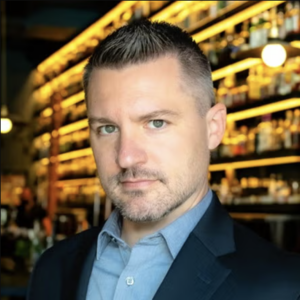
Jared Collett will be speaking at AdExchanger’s Programmatic AI event, taking place in Las Vegas from May 18-20. Click here to learn more and get your ticket. AdExchanger readers get $200 off when they use the code PAI200.
When Jared Collett joined Major League Fishing as the senior director of ad operations in 2019, the organization was going through a transformation.

MLF began as a series of annual fishing tournaments aired on The Outdoor Channel, but became a “full blown league,” in Collett’s words, thanks to funding from Bass Pro Shops in 2018.
That expansion also required the league to invest in developing – and, more importantly, monetizing – its own website content, including livestreams. In ad ops terms, that means MLF has more in common with the average online publisher than the average professional sports association.
Collett spoke with AdExchanger about MLF’s content monetization strategy, with a focus on video.
AdExchanger: What are the primary types of digital ad inventory that you offer to buyers directly?
JARED COLLETT: Our biggest is livestream commercials and pre-rolls. Our livestreams have traditional ad inserts that are SSAI-stitched in so it feels like you’re watching live on TV. Our on-screen talent will key it up and kick off to an ad break, so it’s naturally within the content.
Aside from that, we have traditional display, and then we have sponsorship takeovers where we change the background skin of our homepage. We also expand into email and social audience extension.
Why did MLF choose to host its livestream independently on its website, rather than running through a third-party streamer, like YouTube or Twitch?
At the end of the day, we’re going to get more revenue per view from someone watching on our website than watching on YouTube. It encourages you to go look at other things once the livestream is done. And before you go full screen, you get hit with a couple of display banner ads that generate revenue.
Also, at the time we launched our livestream, YouTube wouldn’t let us run our own mid-roll ads. Neither would Twitch. Now it’s a little bit different, and you can get away with some of that, but we would still be cannibalizing our own audience. If we tell people to go watch on YouTube versus watching on our website, we generate less revenue.
We did partner with Rumble, which is another social video platform. They let us run our ad breaks in there and promote us on their front page. That’s the kind of distribution partner that we like, because we’re bringing them new content and they’re bringing us new eyeballs.
Have you faced any traffic loss from the rise of AI search?
We’ve definitely experienced it in some of our ancillary content. The easiest way to combat that right now is to put content out as video. We’d started to do that anyway, not to combat against AI, but to get more engagement through social media.
Linking to articles died kind of a long time ago. It just shriveled up. It’s still there, but not as good as just putting a video out.
Do you have advice for publishers getting hit hard by declines in search traffic?
I get frustrated, because one of my local news sites will gate content from the Associated Press. But I can take a headline, plug it into Google Search and get 50 articles that are the exact same content. I can click on one of them and read it for free with ads instead of paying you $20 a month. If you’re gating your content, it needs to be unique to you.
I also suggest, again, that publishers do more video. People still read, but we’re so distracted that it’s a lot easier to flip through video on social media or even on a website. Video, from an attention standpoint, is a huge win.
Can you share a preview of what you’ll be presenting on at Programmatic AI?
Publishers need to learn about AI and encourage their teams to use it in different ways. But I don’t think that they need to push it just to push it.
I was talking with someone in the ad operations subreddit the other day. They’d posted that their company came to them and said, “I want everybody to increase their workflows using Copilot or Claude.” It was such a generic request that it made me go, “Okay, it’s very clear that the higher-up who’s asking you to do this has no idea what they’re asking.”
I do think there’s gonna be a huge push into AI, and then there’s gonna be pushback as people want more human interaction. Companies that jump in too quickly and slim their workforces down won’t be able to respond positively. It’s going to hurt direct deals, for sure.
That’s why I say to be smart about it, be cautious, lean in – but don’t jump the gun.
This interview has been lightly edited and condensed.