Pinterest has three main priorities for 2021 and beyond: video, making its trend data actionable and shopping.
On Wednesday, at Pinterest’s first-ever partner and advertiser summit event, hosted virtually, of course, it made announcements related to all three.
“We had a big year in 2020, and we want our advertisers to know more about the progress we’ve made, what’s driving our growth and how that’s laddering up to the big bets we’re making,” Jon Kaplan, Pinterest’s global head of sales, told AdExchanger.
Pinterest added more than 100 million monthly active users globally in 2020 to hit 459 million, a 37% year-over-year increase. Revenue in the fourth quarter was up 76% YoY to $706 million, and 2020 revenue grew 48% to nearly $1.7 billion.
Although Kaplan declined to share specific numbers, he said that video, including video advertising, is starting to become a “meaningful” percentage of Pinterest’s revenue. Video views in Q4 were up more than 100% over the year, and video uploads increased more than 6x.
With that growth momentum in mind, Pinterest is launching a new video marketing tool called Pinterest Premiere that allows advertisers to own an exclusive video placement in the home feed targeting a specific demographic, interest and/or category during a designated time period.

“We want media companies, influencers, publishers and brands to publish directly on our platform, to create a presence there and to get distribution,” Kaplan said.
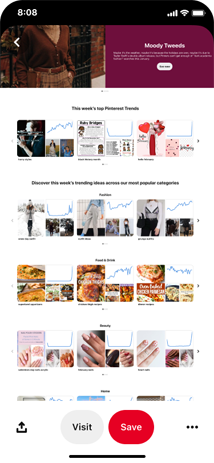
In addition to the video solution, Pinterest is rolling out a self-service platform where advertisers, such as McCormick’s, can access trend data derived from how users interact with Pinterest. Advertisers can use that information to inform their paid and organic media efforts. In the past, Pinterest would pull this data manually.
As a complement to its insights offering, Pinterest is also making its conversion insights feature generally available, which gives advertisers the ability to see in a single report how their promoted campaigns are performing alongside their organic product catalogs and Pins.
“There are lots of examples of advertisers using this information to help them think through their strategy,” Kaplan said. “And this is all part of the journey towards bringing more shopping to Pinterest and providing tools to demonstrate the value we’re driving.”
Shopping is becoming inherent to the overall experience on Pinterest, Kaplan.
Over the past couple of years, Pinterest has tried to ingest as many product catalogs as possible from partners, merchants and retailers so that it has “a backbone for creating new shopping experiences,” he said.
Over the course of 2021, expect Pinterest to introduce new shopping surface areas on its platform and to keep investing in catalog management tools, automated bidding and budgeting solutions as well as better analytics, including an enhanced conversion analysis dashboard for managed advertisers to get a sense of Pinterest’s cross-channel impact on conversions.
Right now, though, it’s not possible for users to actually make purchases directly on Pinterest, like Facebook is doing with Facebook Shops.
But Pinterest isn’t interested in owning the entire transaction, at least not for the foreseeable future, Kaplan said.
“We haven’t ruled it out, but we have a lot of things to do today that we think are more foundational to our road map and that will do more to differentiate our product experience,” he said. “Being able to virtually try on lipstick or eyeshadow with AR, using Pinterest Lens to take a picture in the real world and then shop related products, being able to shop your boards – that’s what we want to do.”