Hey readers! Associate Editor Victoria McNally here – I’ll officially be taking over the CTV newsletter from this point onward, so expect to see my name in your inboxes a lot more.

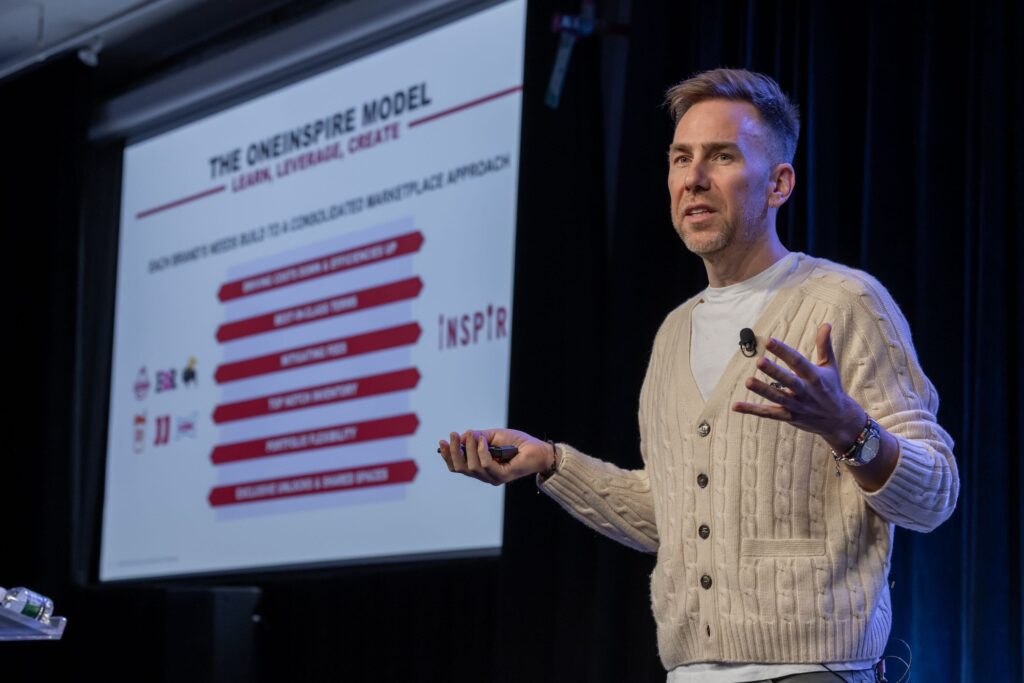
As the chief media officer and SVP of demand generation at Inspire Brands, Travis Freeman controls hundreds of millions of dollars of media spend every year – and he has a little request for anyone buying CTV.

Stop talking about the need for more transparency from OTT providers and start demanding it.

“It’s mind-blowing how big this channel is and how little information we are getting back,” Freeman said, speaking at the second annual CTV Connect Event in New York City on Wednesday.

“The only way we can continue to accelerate as an industry is if we’re all asking for the same thing,” he said.

But even on its own, Inspire Brands has a lot of pull. Although you might not be familiar with the name “Inspire,” you most definitely know the brands in its portfolio: Dunkin’, Sonic, Arby’s, Jimmy John’s, Baskin-Robbins and Buffalo Wild Wings.

Formed seven years ago, Inspire Brands is one of the largest restaurant groups in the US. “[We’re] the biggest company you’ve never heard of.”

Inspire favors a consolidated approach to marketing that considers the needs of all of its brands.

“It’s a portfolio brand that we really treat as a portfolio,” he said. “That’s a big differentiation for us.”

Picking a place to eat

But Inspire still takes care to allow each brand room for its own identity.

Sonic, for example, has a strong connection to sports, which is why the restaurant franchise recently launched endorsement deals with the Southeastern Conference of college sports and the X Games.

Dunkin’, meanwhile, is all about “tentpoles,” meaning big national events like the Super Bowl, the Grammys and MTV’s Video Music Awards.

Having so many brands in its roster allows Inspire some flexibility in terms of ad placement. If, for instance, Dunkin’ needs a spot and Sonic doesn’t, Freeman can switch one out for the other with relative ease, especially because Inspire is always careful to prioritize placements that don’t run in pods alongside its competitors.

Order up

Even so, Freeman and his team don’t get the same level of transparency for their streaming buys that they took for granted in linear TV, including about “what pod we showed up in, what position, what show we were in, what regions,” and other meaningful data points.

Still, this year streaming will be Inspire’s “biggest channel, period,” according to Freeman.

When Freeman first joined Inspire roughly three and a half years ago, the company was primarily buying ads via insertion order. Programmatic buys were typically a managed service and required the use of at least six DSPs, sometimes two or three for each brand.

Now, things have been significantly streamlined. Nearly all of Inspire’s OTT ad spend is put into private marketplace deals using audience data from Epsilon, Yahoo DSP and broadcaster partners like Paramount.

Inspire even has its own way to measure the costs of its digital ad impressions, a metric they refer to as “iCPM,” which stands for “Inspire CPM.” An iCPM combines the size of a target audience, the revenue Inspire can drive from an impression and the cost of that impression.

This structure, said Freeman, allows Inspire to get better transparency at scale, more control over where and when ads appear and higher-value insights, audiences and inventory.

Inspire’s partnership with Yahoo DSP has made a significant difference, too, Freeman said. Not only can they use Yahoo’s foot traffic measurement in their iCPM calculations, but the DSP shared the same “entrepreneurial mindset” as Inspire.

“We are laser-focused on the future,” said Freeman. “We know what we want, and we’re very explicit about that.”


Victoria McNally
Associate Editor
AdExchanger
Top Story of the Week


Meet The Free Gaming Platform – Founded By An Ad Tech Vet – That’s Putting CTV Ads In Video Games

Video gaming is the only market where revenue is largely tied to the sales of consoles and ad-free subscription services, André Swanston tells AdExchanger.
 
STATISTICALLY SPEAKING
 
CTV ad spending in the US is projected to reach $42 billion by 2027, according to research conducted by eMarketer and shared by Amazon Ads at the CTV Connect event in New York City.
Best of the Rest
Welch’s Might Be A Tradition-Rich Company, But Its Marketing Strategy Is All Digital

Juice manufacturer Welch’s – founded 156 years ago in 1869 – barely spends any of its marketing budget on traditional media, including linear TV.

Read on.
What The Trade Desk Means When It Talks About Premium

To zero in on premium inventory, The Trade Desk is analyzing metadata signals about ad placements and pushing adoption of its alternative ID. It's also betting the farm on CTV.

Read on.
Around the Web
What we're reading
  • Sonos is abandoning its plans for a streaming video player. [The Verge]
  • How do some of the biggest TV publishers feel about experiential marketing at SXSW? [Digiday]
  • The COVID-19 pandemic changed TV production forever. [Variety]
Like this email? Forward to a friend.