Agents, Agents Everywhere
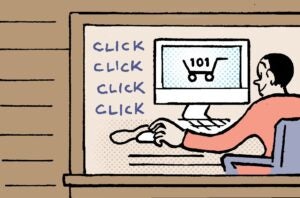
Agentic media buying is all the rage, including for streaming TV.
A new joint effort announced Tuesday will use custom agents to help brand marketers get more from their streaming TV investments, including upfront commitments. The initiative brings together NBCUniversal, its SSP FreeWheel, Dentsu-owned agency Carat and agentic analytics platform Newton.
So, how does it work? Custom buying agents pair identity data from NBCU and FreeWheel with audience intelligence from Dentsu and Newton. The agent uses that audience data and ad performance data to recommend NBCU ad inventory based on an advertiser’s desired outcome.
An unnamed luxury retailer working with Carat is the first marketer to use the solution, although the joint offering will eventually be available to all Dentsu clients. In the meantime, Carat is busy building custom agents for specific advertiser KPIs, everything from search lift to incremental reach.
The promise is that agents could bring outcomes-based buying closer to the mainstream in CTV. Great, right?
But if every buy is judged by immediate results, advertisers could end up sacrificing long-term brand building for short-term gains.
Everything’s Bigger In Texas
Did you happen to catch any ads for Texas Attorney General – and Republican senatorial candidate – Ken Paxton during Fox’s “Sunday Night Football” broadcast last weekend, despite not living in Texas where he’s running?
On Sunday, viewers reported seeing multiple pro-Paxton ads from Texas PAC during not just the Cowboys-Texans game on Sunday night but also during the Eagles-Rams game, the Packers-Buccaneers game and the Jets-Bears game.
According to Texas-based news outlet Chron, Texas PAC likely bought national advertising time because it was cheaper than trying to break into the crowded Texas TV market.
An estimate from political ad platform Medium Buying suggests it would’ve cost more than $2 million to buy campaigns for a single 30-second ad spot in Houston, Dallas, San Antonio and Austin during the Cowboys-Texans game.
But cost may not have been the only factor. Perhaps Paxton’s supporters wanted to counter the growing national attention on his opponent, James Talarico, since he won the Democratic primary in March. Talarico’s interviews with Stephen Colbert and Jimmy Kimmel – and the fact that neither segment could air on broadcast TV – made headlines nationwide.
Talk about doing more with less.
Claim To Fame
Just yesterday, this newsletter looked at brands testing the limits of claims like “Keto-friendly,” “sugar-free,” “gut-healthy” and “Protein!”
Well, we’ve got some related news to share about how the pursuit of a compelling marketing claim can send household product and food and beverage brands down some pretty strange paths.
Pet food makers, for example, are investing in major research facilities to measure and demonstrate claims like “preferred by cats,” as The New York Times reports. (Apparently, cat adoption rates are way up, while dog food purchase rates are flat, so a lot of the research is cat-centric.)
Candy giant Mars, meanwhile, is undertaking a costly and tricky overhaul of M&M’s production – which has essentially remained unchanged since World War II – so that it can put the words “no artificial colors” in ads and on packages. This is such an expensive and challenging process because to get blue or brown coloring it needs a great deal of spirulina – but spirulina is an algae-like substance that gunks up its machines.
Without blue and brown, the remaining yellow, green, red and orange candies look distinctly tropical.
Oh, and then there’s Procter & Gamble, which has cut marketing budgets in recent years and shifted more spending to product R&D, including innovations, such as crotch deodorant and woven-tile laundry detergent.
Guess sometimes the product itself is the pitch.
But Wait! There’s More!
It’s official: Skydance has closed its $110 billion acquisition of Warner Bros. Discovery. [Deadline]
What human in the loop? S4 Capital’s Monks agency lets its AI agents run unsupervised for days at a time. (By the way, the company has cut 800 jobs so far this year.) [Digiday]
San Diego County files a lawsuit alleging that AppLovin shows graphic ads in apps marked appropriate for kids. [Bloomberg]
A British class-action suit claims Google drove up costs for Android developers and users through its 30% Google Play Store fee. [Bloomberg]
Thanks for reading AdExchanger’s Daily News Roundup. Want it by email? Sign up here.