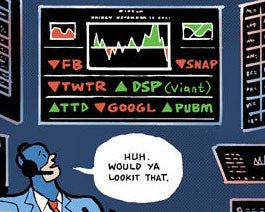

TV programmers and streamers are sharing their financial report cards for last quarter – and the results are quite a mixed bag.
Netflix gained 19 subscribers in the last quarter, and Max gained 6.4 million. Hulu gained 1.6 million subs, while Disney lost 700,000 in the same period. Subscribers and churn fluctuate widely based on content and time of year.
The stark differences in subscriber gains between the major streaming services highlight the intensifying nature of their battle for subs and, most importantly, advertising revenue.

Networks are still fighting the streaming wars
Although subscriber growth is inconsistent across the board, what is consistent is the competition to attract advertisers by boasting global expansion and programmatic integrations. Streamers hope that, by making ad buying on their platforms as easy and widely available as possible, they can convince all brands to spend bigger budgets on their apps.
Streamers hope smaller advertisers new to streaming, like direct-to-consumer brands, might be particularly swayed to spend.
Disney, for example, is focused on content bundling and new app launches, including ESPN+, to gain subscribers and, in turn, attract advertisers. As for Warner Bros. Discovery, the network is launching Max in new international markets while distributing more content on other services, including Netflix and Prime Video.
Netflix, meanwhile, is busy rolling out its ad tech globally while bolstering programmatic relationships. While the entertainment giant’s ad platform will launch in the US over the next couple of months, advertisers have recently been able to buy Netflix inventory through The Trade Desk, Google’s DV360 and Magnite.
In each case, these streamers want to attract more advertisers by offering them more viewers and more data than the competition.
These priorities also apply to streaming distribution platforms, not just pure-play streamers.
Roku, for example, continues to emphasize deeper relationships with programmatic platforms to reach new groups of advertisers it may have been missing prior. While Roku didn’t call out specific platforms during its earnings call, it made its reasoning clear. Roku needs demand diversification to expand its pool of brand clients so it can get more incremental ad revenue.
In other words, ad revenue remains the name of the streaming game.