
The FAST channel ecosystem is providing advertisers with a sandbox (no, not that sandbox) to test new CTV formats, targeting tools and programmatic buying methods.
It’s a lower-cost, high-volume environment where publishers and their partners have room to play around with ad products that would be harder to roll out in a linear TV setting.
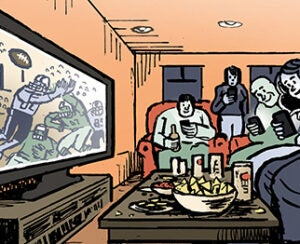
The irony is that FAST evokes a simpler era of TV, when you could turn on the set and something would just be on – complete with regularly timed commercial breaks, of course.

The experience might feel old school, but the way ads are being matched to what’s on-screen is getting more sophisticated, according to Raghu Kodige, CEO and co-founder of contextual ad targeting company Anoki.
“These publishers recognize that, in order to be competitive with either the larger premium environments or broadcast, they have to lean into more innovation,” said Kodige, pointing to Anoki’s partnership with Amagi, a company that helps major television brands distribute and monetize their own FAST channels.
Since 2024, the two have been working to develop scene-level contextual targeting capabilities, and in March they released a new overlay format that serves contextually relevant ads within relevant scenes in real time.
For example, say you’re in the middle of the 2009 movie “Julie & Julia” on a streaming FAST movie channel, and you’re watching a scene where Julia Child (as played by the indomitable Meryl Streep) is taking a fresh pie out of the oven.
If a bakeware brand wanted to reach you based on that moment, they’d typically have to wait until the next available mid-roll ad pod. With scene-level ads, the message appears just beneath the content in a squeeze-back format, which compresses the main video and frames it with an ad that runs down the side and across the lower third of the screen.
“The main goal here,” Kodige said, “is can you make your ad memorable for that user by putting it in the right context?”
Context is king
Not that flashy new ad formats get a pass. All the usual advertiser concerns need to be addressed regarding frequency, measurement and brand suitability.
In terms of frequency, in-scene ads never appear next to a proper ad break and are spaced out such that the user won’t encounter more than six ads in an hour, said Srinivasan KA, Amagi’s co-founder and president of global business. He also assured me that these ads will as measurable as typical FAST ads.
Brand safety and suitability is a trickier subject, though, given how much tone and context can radically impact the experience a viewer has while watching TV. To solve for that, Anoki has a platform called ContextIQ that allows marketers to block or whitelist specific titles and even filter scenes based on certain types of content, like violence or sex.
A pizza brand, for instance, could type in the word “pizza” to see a list of shows and movies that include scenes with pizza in them – although not every pizza scene is necessarily appropriate, depending on their risk tolerance. Some advertisers might not want their brand to show up in that one episode of “Breaking Bad” where Walter White throws his pizza on the roof in a fit of frustration, for instance, and they can use this tool to avoid that scene.
That level of granular control raises a question. Will brands use it so aggressively that content with mature subject themes becomes harder to monetize? Kodige doesn’t think so. In fact, he said, Anoki already has a lot of video game clients that have no problem appearing alongside violent imagery. What’s unsuitable for one brand is spot-on for another.
The new ads are already helping with marketing outcomes. In a recent case study with an unnamed auto brand, Anoki reports that in-scene ads led to a 29.8% lift in visit intent (meaning people who deliberately visit the company’s website) and an 11.4% lift in brand association.
In early tests, the format delivered similar lifts across both high- and low-consideration verticals, including QSR, travel and even niche, high-end kitchen appliances – saw similarly positive results, Kodige added.
Dentsu was one of the first agencies to test in-scene ads, said Kevin Weigand, the holdco’s VP of partnerships for video and audio. Many of Dentsu’s clients have “warmed up” to the idea of buying FAST over the last five years, he said, and performance-focused clients in particular are especially drawn to these experimental formats.
But the appeal isn’t just novelty; it’s the chance to tie creative more tightly to what viewers are watching and get more out of each impression.
“It’s just the start of how much deeper we can start using some of these new technologies to align with context and content,” said Weigand.
So, call it whatever you want – long-tail, non-premium, niche – for now, FAST is where TV advertising goes to experiment.