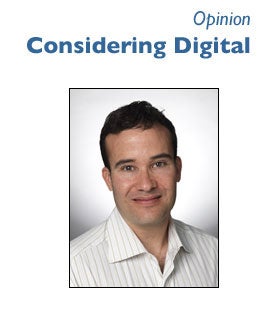
The ‘Considering Digital’ Category

Rise of the Demand-Side Service Layer

Michael WalrathMichael Walrath is the former CEO of Yahoo!'s Right Media.

As eBay became pervasive, a slew of companies appeared with the sole purpose of helping people buy and sell goods on the giant auction site more effectively. These service businesses earned a slice of the transaction value for their efforts. Others took a different approach. Consignment shops and antiques dealers would buy goods on eBay and resell them at a markup in their stores, effectively arbitraging information (many sellers don't know the value of their goods) and expertise (goods can be perceived as more valuable when purchased from a specialist).

Years ago at Right Media, we used to talk about the need for liquid marketplaces for digital advertising. Soon, a common theme emerged: "You'll know we've been successful creating liquidity when the service layer materializes." What we meant by this was simple. When businesses develop with the primary purpose of helping buyers and sellers of advertising make the most of marketplace opportunities, then we can begin to talk about successfully building a truly liquid marketplace and unlocking the efficiencies it offers.

Much as 2003 - 2007 saw the rise of the ad network, 2007 - 2010 has been characterized by the rise of the demand service layer. With exchanges and networks, we achieved a critical mass of inventory available in a competitive marketplace. In turn, we saw a dramatic increase in the *complexity* of that marketplace. It is ultimately this complexity (the number of buyers and sellers and differing methodologies for valuing ad space) that creates opportunity for service businesses geared toward reducing that complexity, and unlocking new value in the marketplace.

Read the rest of this entry »

The Cycle of Innovation for Digital Advertising

Michael WalrathMichael Walrath is the former CEO of Yahoo!'s Right Media.

I believe that there is a cycle of innovation at work in digital advertising.  Where we are in the cycle at any given time depends on many factors, including the economy, availability of capital, supply and demand imbalances, M&A appetite, etc.

Let’s take a look at the cycle.  We’ve got to start somewhere, so let’s start with an ad recession.

Recessions and Innovation

I think we can mostly agree that recessions suck, yet they also set the stage for periods of great innovation.  How?

Recessions cause growth to slow, revenues to suffer and some really lackluster financial performance.  This is especially difficult for the large public companies that have to talk about how badly things are going…all the time. 

During downturns, these companies naturally reduce their investments and ambitions to bolster financial performance, creating a vacuum of unmet market needs.   Entrepreneurs see an opportunity to serve these needs and talented people shake loose from established players.  Capital is harder to come by, so only the best ideas and teams tend to get funding during these times.  It’s counter-intuitive, but I believe that history shows that the best companies often start during difficult markets.  These companies are forced to show more focus, discipline and flexibility than over-capitalized companies founded during strong markets.  The business models of recession vintages are often built on worst-case scenario assumptions.  Once the recovery starts, their fundamentals can and do improve.

Read the rest of this entry »

      © Copyright 2010 Adexchanger.com. All rights reserved.
      Terms Of Use      Privacy Policy      Contact Us