 “Ad Agents” is a column written by the agency-side of the digital media community.
Chris Tuleya, vp of Direct Response at Underscore Marketing, a boutique, digital marketing agency.
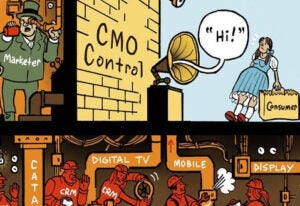
In order for audience-based buying to move forward, digital advertisers need to break free from the offline media shackles that come with demographic buying.
Audience-based buying is a model that will benefit digital marketers immensely by letting them discern consumer intent. This advantage over other media has been a major driver of the success of search marketing since its inception. Search engines are blind to demographics – Type in a search query and websites have the chance to read the intent of the searcher and target appropriately, regardless of the searcher’s demographics. I have been saying for years that if Oprah searches on the same term as you, you will likely receive the same results (yes, I know this has changed slightly in the past years, but you get the point). Search is audience-based targeting at its simplest form. Someone using ‘purchase’ in their search query is likely looking to purchase, does their demographic profile matter?
Our end objective, regardless of the media channel we use, is to be blind to sex or age, as long as the prospect will be receptive to our message. I care about the end goal; not the demographics of who is raising their hand. With search it comes down to performance on terms – which ones work and which ones do not. Shouldn’t all digital follow the same approach?

At one point, Microsoft sold a product that prompted advertisers to pay more to reach searchers who fell into the advertiser’s target demo. When pitched on it, I responded by asking why I would ever do that. If they all searched on the same term, is it fair to say that one person, who happens to fall within the sweet spot of a target demographic, is more valuable than someone else? If they are both looking for the same thing, why should an advertiser pay more for this person? I say show me the data…
The adoption of this audience-based model is a long time coming for the advertising world. Demographics were always a surrogate for what an advertiser was really looking for anyway. And now that real intent information has arrived, it is about time digital advertisers start using intent data to execute stronger campaigns. Marketing has always been about playing the odds and audience-based buying improves these odds in advertisers’ favor.
For advertisers and agencies, this model opens up an infinite world of buyable impressions, many we would never have thought about buying prior to this capability. No longer do we have to focus ad dollars only on sites where a high composition of our audience can be found. (And no longer do we have to pay a premium to do so, whether the audience is ready to purchase or not.) Instead we can plan around the objective of our campaign and make smart marketing decisions by being more relevant to our audience at the right time.
For publishers, audience-based buying increases the quality and quantity of ad inventory and boosts CPMs. It levels the playing field against the mindset that audiences must fit nicely into a demographic bucket and that only sites with a high composition of a demo target will get the lion’s share of budget dollars from premium advertisers. Performance will speak for itself, allowing publishers to better make a case for using them on buys. It flattens the world by boosting the value of placements that historically may not have been valued by advertisers. As technology improves, audience-based buying will not be limited to desktops. Mobile devices and tablets will surely prove to be viable channels for further increasing the value of ad impressions.
Follow Underscore Marketing (@_MarketingLLC) and AdExchanger (@adexchanger) on Twitter.